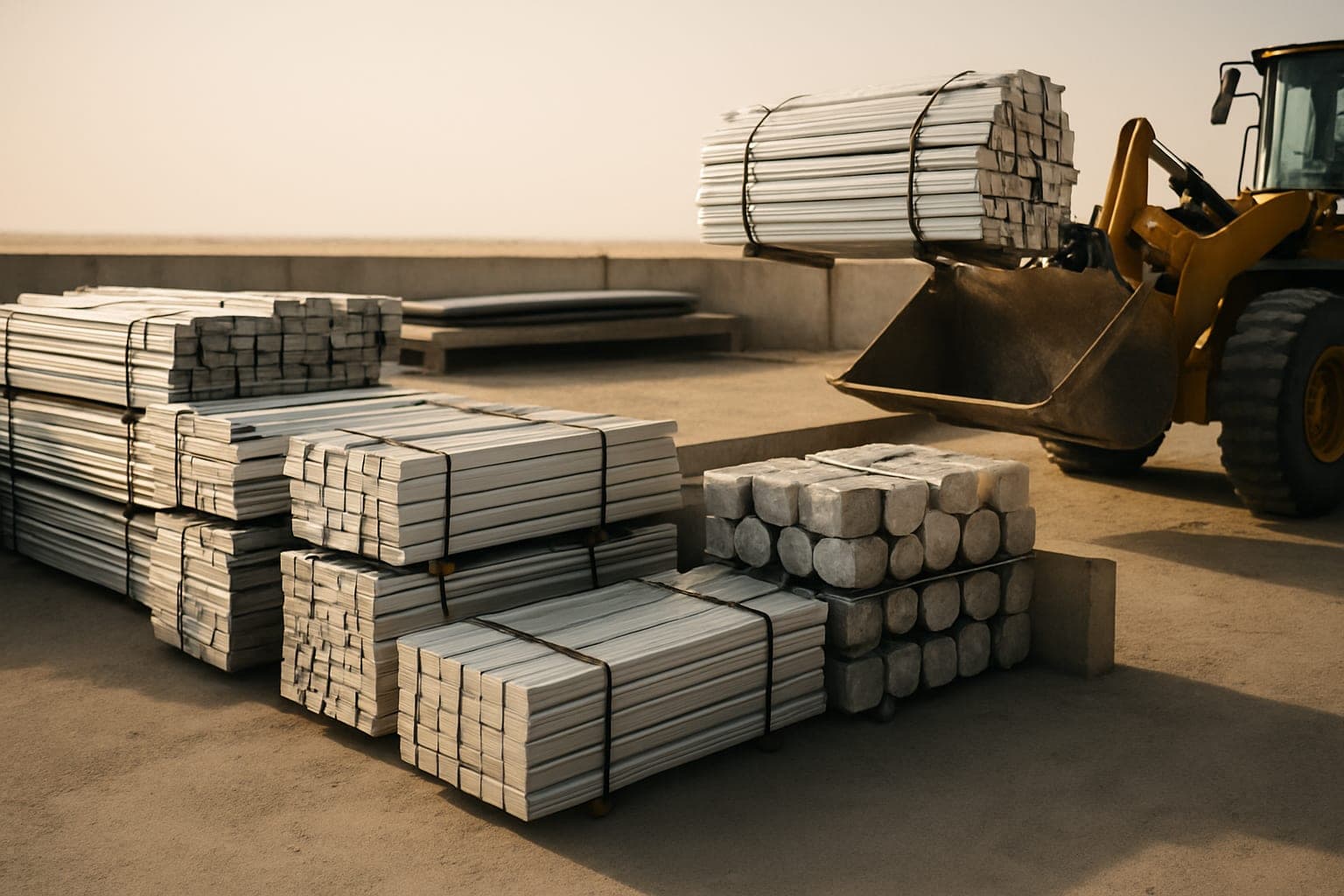
Under CBAM, aluminium scrap enters the calculation with zero embedded emissions, so a remelt route reports roughly 0.05 to 0.10 tCO2e per tonne against 1.5 to 2.1 for a primary smelter. At the Q3 2026 certificate price of 82.32 euros, that gap is worth about AED 666 a tonne once free allocation ends in 2034.
What exactly changed on 1 January 2026?
The definitive regime replaced the transitional one, and quarterly CBAM reports ended with the 2025 filings. From 1 January 2026 the embedded emissions in your customer's imports create a real liability. Nothing is payable yet. Certificates only go on sale on 1 February 2027, and the first annual declaration covering calendar 2026, together with the surrender of certificates against it, falls due on 30 September 2027 (ftmercati CBAM Guide, August 2026; Akiva StratIQ, October 2026).
From 2027 the rhythm tightens. At each quarter end an authorised declarant must hold certificates covering at least 50% of the emissions embedded in goods imported since the start of that year. The quarterly published price also disappears, because the Commission moves to a weekly certificate price in 2027. That matters if you quote EU customers on fixed terms more than a quarter forward (SteelOrbis, 6 October 2026).
One point UAE exporters keep getting wrong: you do not file anything. The authorised CBAM declarant is the EU importer, and the importer initiates the data request to you. If you cannot supply verified installation data, the importer falls back on default values and you have no say in the outcome. Positions in this article are as at 12 October 2026, and the downstream extension file is still moving.
How big is the carbon gap between primary and scrap-fed metal?
Smaller than the number circulating on LinkedIn, and still large enough to move a procurement decision. The familiar comparison of about 16 tonnes of CO2e per tonne of primary aluminium against roughly 0.5 for recycled is a cradle-to-gate life cycle figure dominated by electricity. CBAM does not price electricity for aluminium. For aluminium and steel the mechanism covers direct emissions only, with indirect emissions priced for cement and fertilisers (Commission calculation guidance as summarised by cbamguide.com, August 2026, consistent with Light Metal Age, 6 October 2026).
So the priced comparison is 1.5 to 2.1 tCO2e per tonne for a modern Hall-Héroult smelter against 0.05 to 0.10 for remelt, where the scrap input itself carries nothing. Use the life cycle numbers and you overstate the CBAM saving by roughly eight times.
There is an awkward corollary for anyone marketing solar-backed metal. Clean power does not reduce your CBAM figure under the current scope. It supports customer ESG requirements and low-carbon product claims, which is a separate commercial argument. What moves the CBAM number is anode consumption, anode effect and PFC management, and scrap substitution.
The EU benchmarks used in the free allocation adjustment make the same point with harder edges: 1.423 tCO2e per tonne for primary aluminium and 0.091 for secondary, with secondary defined as metal more than 50% sourced from scrap (Argus Media, 12 December 2025). That 50% line is the operational target to design an intake plan around, not a marketing slogan.
What does it cost per tonne at the Q3 2026 certificate price?
The CBAM certificate price is the weighted average of EU ETS auction clearing prices for the quarter. It ran at 75.36 euros in Q1 2026 and 75.28 in Q2, then rose 9.4% to 82.32 euros for Q3, published by the Commission on 5 October 2026. The Q4 figure is due on 4 January 2027. No dirham price is published anywhere, so every AED figure below is our own conversion at about AED 4.134 to the euro, derived from the implied EUR/USD rate in trade reporting of 6 October 2026 and the dirham peg of 3.6725 to the dollar.
| Route | Emissions used (tCO2e/t) | Gross cost at EUR 82.32 | 2026 net | 2030 net |
|---|---|---|---|---|
| Primary, UAE default plus 2026 mark-up | 2.057 | EUR 169.33 (AED 700) | EUR 55.12 (AED 228) | EUR 109.00 (AED 451) |
| Primary, verified actual, efficient plant | 1.50 | EUR 123.48 (AED 510) | EUR 9.27 (AED 38) | EUR 63.15 (AED 261) |
| Secondary, verified, over 50% scrap | 0.10 | EUR 8.23 (AED 34) | EUR 0.93 (AED 4) | EUR 4.37 (AED 18) |
Net figures subtract the specific embedded free allocation at the CBAM factor for the year, 2.5% in 2026 and 48.5% in 2030. Default values are not a soft landing. The UAE country-specific defaults reported by Argus on 12 December 2025 are 1.87 tCO2e per tonne for unwrought aluminium, 2.22 for intermediate products and 2.66 for foil, each carrying a mandatory mark-up of 10% in 2026, 20% in 2027 and 30% from 2028. At Q3 pricing, foil on defaults is a gross 240.87 euros a tonne, about AED 996.
Two cautions before you model anything. At least one widely read practitioner guide puts the UAE unwrought default nearer 2.5 tonnes rather than 1.87, so read the annex to Implementing Regulation (EU) 2025/2621 yourself. And Implementing Regulation (EU) 2026/1740, published 31 July 2026, corrected several defaults retroactively to 1 January 2026, with CN 7616 finished articles re-priced sharply upward, which means some 2026 calculations will need restating.
Why published CBAM calculators disagree by a factor of thirteen
Commission Guidance No. 4 on the free allocation adjustment, published August 2026, sets the liability as embedded emissions minus the specific embedded free allocation, and requires the two to be determined on the same basis. Several popular CBAM websites instead multiply the gross cost by the CBAM factor, which produces about 2.82 to 4.31 euros a tonne for primary aluminium in 2026. Under subtraction, a UAE producer on defaults is at roughly 55 euros. That is a thirteen-fold difference, so check which method your adviser or your buyer is using before anyone signs a price adjustment clause.
Subtraction produces a second finding worth sitting with. A verified primary smelter at 1.50 tCO2e per tonne is close to the 1.423 benchmark, so its 2026 bill is small. The fastest lever in the next eighteen months is therefore verified actual data in place of a marked-up default, not scrap. Scrap is the structural lever, and it pays hardest from 2030.
The CBAM factor runs 2.5% in 2026, 5% in 2027, 10% in 2028, 22.5% in 2029, 48.5% in 2030, 61%, 73.5%, 86% and 100% in 2034. The steepest single step is 2029 to 2030, a 26 point jump in one year. If you are building a capex case for remelt capacity or a scrap intake bay, build it against 2030, not against 2026.
One modelling trap. Guidance No. 4 states that scrap, not being a CBAM good, carries zero embedded emissions and, for consistency, no specific embedded free allocation. A producer above 50% scrap is benchmarked at 0.091, not 1.423. The trade is still strongly favourable, because going secondary cuts the emissions figure far more than it cuts the offset, but anyone who assumes they keep the primary benchmark while reporting secondary emissions will model a negative liability that does not exist.
Does the 50-tonne threshold mean nobody will ask?
Since 1 January 2026 a cumulative mass threshold of 50 tonnes of CBAM goods per importer per calendar year applies, and the masses of iron and steel, aluminium, cement and fertiliser are added together. The old 150 euro consignment exemption is gone, removed by Regulation (EU) 2025/2083. The threshold exempts roughly 90% of importers, mostly SMEs, while keeping about 99% of embedded emissions in scope (EcoLedger, August 2026).
Fifty tonnes is two to three containers of billet or extrusions a year. The test sits at importer level, not per supplier or per shipment, so you cannot work out from your own tonnage whether your customer is exempt. Ask in writing whether the buyer is an authorised CBAM declarant and expect that confirmation to become a standard annex to the purchase order. The European Parliament's trilogue mandate would cut the aluminium threshold to 5 tonnes, which would put effectively every EU customer in scope.
Worth knowing for traders: CN 7602, aluminium waste and scrap, is outside CBAM today, as is CN 7204 for ferrous scrap. A UAE yard shipping scrap to Europe has no CBAM liability of its own at present. That is a different question from scrap used as an input, and the Parliament's mandate would change it.
Where do UAE extruders source verified scrap input?
Start inside the fence. Run-around process scrap from your own presses and saws is the cleanest material you will ever handle, and it is the easiest to evidence because it never leaves your weighbridge. Most extruders in Jebel Ali, Dubai Industrial City and Hamriyah already recycle it, but few record it at lot level in a form a verifier would accept.
The second tier is traded segregated material: 6063 offcuts, press butts and billet ends from other fabricators, plus clean sheet skeleton from rollers. The yards holding this sit in the familiar belt, Al Quoz, Ras Al Khor, Mussafah and the industrial areas around Hamriyah and KEZAD, which rebranded from KIZAD. We list verified metals sellers on the metals marketplace, with UAE PASS identity checks on the counterparty, escrow through MyFatoorah and a 48-hour inspection window, which is the practical answer to alloy mis-declaration before the material reaches your furnace.
We are not quoting a 6063 price here. As of early October 2026 we could not verify a current published assessment for UAE clean 6063 offcuts, and UAE aluminium scrap trades as a negotiated discount to LME cash rather than at a listed number, so any figure we printed would be a guess. Get the discount from your index provider or directly from two Sharjah and Dubai traders on the day you buy.
The third tier is post-consumer material, and it is where the 2028 story sits. End-of-life curtain wall, window and door frames, demolition aluminium, shopfitting sections and old radiators all qualify. Dubai projects already generate paperwork for this stream because of the 50% construction and demolition diversion rule, which means the origin trail your verifier wants is often already being created by someone else on the site.
On secondary billet, EGA operates an aluminium recycling plant at Al Taweelah alongside its Jebel Ali and Al Taweelah smelters. A capacity figure of 150,000 tonnes a year has circulated since the 2022 announcement, but we have not been able to confirm current output or how much is available to third parties, so treat it as indicative and ask EGA directly before you build it into a supply plan.
Why 6063 offcuts are a two-year answer, not a ten-year one
Both pre-consumer and post-consumer scrap are zero-rated today. That is scheduled to change. Commission proposal COM(2025)989 of December 2025 extends CBAM to downstream goods and brings pre-consumer steel and aluminium scrap in as a precursor input. The Council's general approach of 12 June 2026 kept pre-consumer scrap in scope and left post-consumer scrap excluded, with effect from 1 January 2028. Parliament would go further and treat all aluminium waste and scrap as a precursor, including post-consumer, with a single default value for all unwrought aluminium. Trilogue agreement is targeted for end-2026 or early 2027 (Mayer Brown, 7 October 2026).
Segregated production offcuts are pre-consumer under the ISO 14021 definition, which excludes rework reclaimable in the same process. So the stream the market is currently chasing is the one most likely to lose its zero rating first. Build a blended book weighted toward verifiable post-consumer material, use offcuts as the near-term quality fill, and record the pre-consumer or post-consumer classification at intake now, two years before it becomes a priced distinction.
What documentation will your EU buyer demand?
Guidance Document No. 5 on aluminium requires installation-level actual emissions data or marked-up defaults, verified origin for every precursor, and verification reports where applicable. That is the compliance layer. Underneath it sits a yard-level chain that most UAE operations do not yet have.
- Installation-level monitoring of direct emissions, with a documented methodology that an accredited verifier has reviewed.
- Weighbridge tickets for every inbound scrap load, gross, tare and net, time stamped and sequentially numbered.
- A mass balance per furnace campaign and per month that reconciles scrap in plus primary and alloying in against metal out, dross and melt loss.
- Grade and origin per lot: alloy family, supplier identity, emirate of origin, transfer documents, and pre-consumer or post-consumer classification.
- Segregation evidence: separate bays, labelled bins, no commingling of 6063 with mixed 6xxx, 5xxx or painted and anodised material, plus XRF or OES readings on intake lots.
- Moisture and contamination control records, especially for turnings and swarf.
- Third-party verification by an accredited verifier, booked early, because verifier capacity is reported as tight in the definitive regime.
- A contractual flow-down clause mirroring the one your EU buyer puts in its purchase order, pointed at your own scrap suppliers.
Why a genuine recycled claim still fails the audit
The verifier is not testing whether the metal was recycled. It is testing whether the number is auditable. Mixed alloys mean you cannot evidence the grade. Oily swarf changes melt loss, so your mass balance will not reconcile. No weighbridge trail means the scrap tonnage in that balance is an assertion rather than a record.
In all three cases the verifier declines, the installation data fails, and the importer reverts to the UAE default with its mark-up, 2.057 tCO2e per tonne for unwrought in 2026. That is the worst outcome available: you bought the scrap, you paid to melt it, and you are priced as though you had not. The same intake discipline feeds the reporting that UAE federal climate rules will require of large emitters, which we covered in our note on Scope 3 waste emissions entering UAE climate law reporting.
One last item to check with your adviser. Regulation (EU) 2023/956 allows the CBAM liability to be reduced by a carbon price already paid in the country of origin. As of October 2026 we could not confirm a UAE compliance carbon price that would qualify, so model on the basis that no deduction applies and revisit if that changes.
Frequently asked questions
Does CBAM apply to aluminium scrap exported from the UAE?
No. CN 7602, aluminium waste and scrap, sits outside the CBAM goods list today, as does CN 7204 for ferrous scrap, so a UAE yard shipping scrap to an EU buyer has no CBAM liability of its own. The European Parliament's trilogue mandate would treat aluminium scrap as a precursor from 2028, so the position is under negotiation as at October 2026.
Is recycled aluminium completely exempt from CBAM?
Not quite. The scrap input carries zero embedded emissions in the calculation, but remelting still generates 0.05 to 0.10 tCO2e per tonne of direct emissions that you must report. Under the Council's position of 12 June 2026, pre-consumer scrap such as segregated 6063 offcuts becomes a CBAM precursor from 1 January 2028, while post-consumer scrap stays excluded.
How is the 50-tonne threshold calculated?
It is a cumulative net mass of CBAM goods per importer per calendar year, adding iron and steel, aluminium, cement and fertiliser together. It is assessed at importer level, not per supplier or per shipment, and the old 150 euro per consignment exemption was removed by Regulation (EU) 2025/2083. Ask your EU buyer in writing whether they are an authorised CBAM declarant.
Will solar-powered aluminium reduce our CBAM bill?
No, not under the current scope. CBAM prices direct emissions only for aluminium and steel, with indirect electricity emissions priced for cement and fertilisers. Clean power still supports customer ESG requirements and low-carbon product claims, but the levers that cut a CBAM figure are anode consumption, PFC management and scrap substitution.
Who files the CBAM declaration, the UAE exporter or the EU importer?
The EU importer, as the authorised CBAM declarant. The importer initiates the data request and you supply installation-level emissions data and precursor origin records. The first annual declaration covers calendar 2026 and is due with the matching certificate surrender on 30 September 2027, with certificates first on sale from 1 February 2027.
What does the UAE default value cost us per tonne in 2026?
Using the Argus-reported UAE default of 1.87 tCO2e per tonne for unwrought aluminium plus the mandatory 10% mark-up for 2026, you report 2.057 tonnes. At the Q3 2026 certificate price of 82.32 euros that is a gross 169.33 euros a tonne, about AED 700 at our conversion of AED 4.134 to the euro. Verified actual data at an efficient plant would cut that materially.

Comments(0)
Sign in to join the conversation.