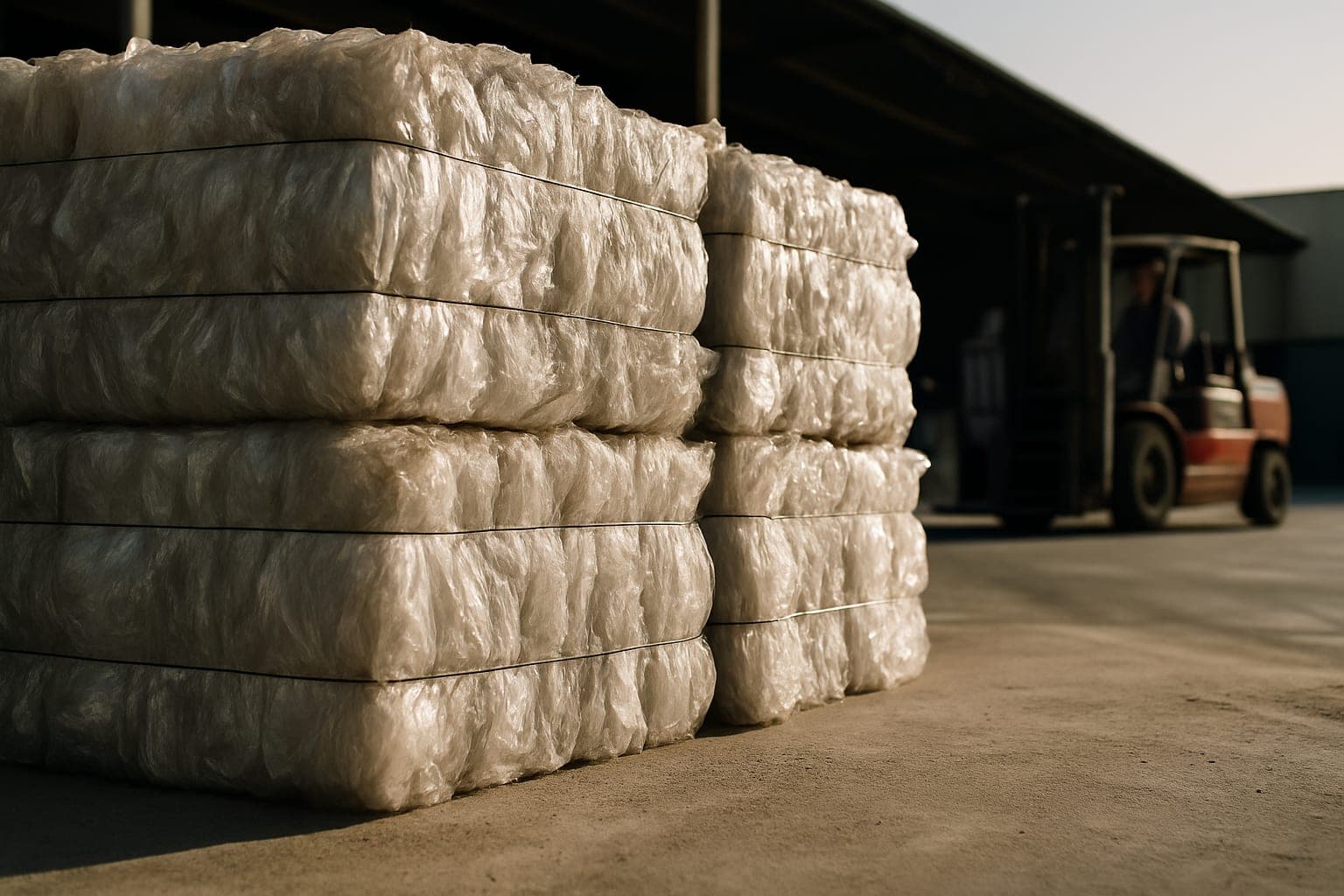
Malaysia has required SIRIM approval and 99.5% homogeneous bales since 1 July 2025, Indonesia banned plastic waste imports outright on 1 January 2025, and India now gates customs clearance on EPR portal registration. For UAE sellers the binding constraint is specification, not origin, and the price signal has moved back toward local reprocessors in Al Quoz, Al Sajaa and KEZAD.
Which Asian markets still take a UAE plastics bale?
Three regimes changed inside eighteen months, and they moved in different directions. Malaysia tightened to a point where most post-consumer material cannot qualify. Indonesia closed. India stayed open but shifted the gate onto the importer's compliance file, which means a container can sit on the quay while somebody else's paperwork is resolved.
| Destination | Status | What it means for a UAE bale |
|---|---|---|
| Malaysia | Open only with approval, from 1 July 2025 | Imports permitted only if approved by SIRIM, a government agency under the Ministry of Investment, Trade and Industry, and compliant with the Guidelines for Importation and Inspection of Waste Plastic. Material must be at least 99.5% homogeneous, non-plastic contaminants capped at 2%, zero tolerance for food, oil or e-waste residue. |
| Indonesia | Closed, from 1 January 2025 | The ban covers all types of plastic waste, including sorted waste. Roughly 260,000 tonnes a year of imports were affected, per Novrizal Tahar of the Ministry of Environment. |
| India | Open, gated on the buyer | CBIC Instruction No. 21/2025-Customs of 2 July 2025 requires importers of plastic raw materials to show proof of registration on the Centralized EPR Portal before consignments clear customs. |
Malaysia: the origin rule is not your problem, the purity rule is
Under the Malaysian guidelines, a mixed load may contain only PE, PET and PP. Every other resin has to ship homogeneous. There is also an origin filter: only scrap from countries that endorse the Basel Convention or hold formal trade agreements with Malaysia is eligible. The United States, which shipped about 35,000 tonnes in 2024, is excluded, along with East Timor, Fiji, Haiti, San Marino and South Sudan.
This is where local traders keep misreading the news. The UAE is a Basel party, so the origin filter does not block you. What blocks you is 99.5% homogeneity on a bale that came off a mall compactor or a mixed commercial collection round. RECOUP's assessment of the guidelines is blunt about the practical effect.
The guidelines effectively prohibit the import of post-consumer plastic waste in most cases, given the difficulty in meeting the new purity standards.
Read that against your own material. Clean industrial LDPE stretch film off a single distribution centre can plausibly hit the spec. A commingled rigid bale with PS lids, PVC strapping and a damp cardboard content cannot, no matter how good the photographs look.
Indonesia: "but my bale is sorted" is no longer a defence
The Indonesian measure came into force on 1 January 2025 and was confirmed by the Ministry of Environment. The detail that matters commercially is scope: it applies to all types of plastic waste, including sorted waste. For years the standard answer to a tightening import rule was to sort harder and ship single-polymer. That answer does not work for this lane.
India: gated, not closed, and the demurrage risk sits with you
India remains a real destination, but the obligation created by CBIC Instruction No. 21/2025-Customs rests on the Indian buyer, who must be registered on the Centralized EPR Portal before clearance. The 2024 amendment widened the definition of "importer" to cover resin, pellets and intermediate material, which pulled a lot of recyclate traders into scope who previously were not. If your buyer's registration is incomplete, the box waits. You are the shipper of record, so the detention and demurrage clock is your exposure, not theirs.
What has to happen at the UAE end before the box moves?
The Basel plastic waste amendments that took effect on 1 January 2021 split plastic scrap into a green-listed stream for near-single-polymer, recycling-ready material and a prior informed consent stream for anything mixed or contaminated. Most of what comes off a UAE commercial collection sits in the second category, and that triggers a full notification run through the Ministry of Climate Change and Environment.
- Classify the material honestly against the Basel plastic entries. If it is mixed or carries residue, it is a prior informed consent shipment, and declaring it green-listed to save time is how loads get seized at the other end.
- Apply to MoCCAE for the transboundary movement approval. The published fee is AED 500 and the stated processing time is five working days, subject to six published conditions on the permit.
- Wait for the competent authority of the destination country to give written consent. Nothing sails before that consent exists on paper, and for Malaysia the SIRIM approval has to line up with it.
- Keep the movement document with the consignment from gate to gate, alongside the contract with the consignee.
- Clear customs with the trade licence, bill of lading and commercial invoice, plus payment of any per-tonne export fee that applies to the stream.
- Budget for take-back. Under Basel, if the movement cannot be completed as notified, the material comes home, and the return freight is the exporter's bill.
Build that sequence into your quote. A five working day permit plus a consent round-trip with a foreign ministry is not a same-week export, and a buyer in Port Klang who wants material in fourteen days is asking for something the paperwork will not deliver.
Does plastic scrap carry a UAE export fee?
The federal per-tonne export fee schedule on waste streams is published and specific. These are the reference points traders quote most often.
| Stream | Published export fee |
|---|---|
| Steel scrap | AED 400 per tonne |
| Copper scrap | AED 400 per tonne |
| Used cooking oil | AED 400 per tonne |
| Electronic waste | AED 300 per tonne |
| Paper and cardboard | AED 140 per tonne |
No plastics line appeared in any version of the schedule we retrieved. We are flagging that as unconfirmed rather than printing it as a fact, and you should verify it with your broker for your specific HS code before you price a shipment. If it holds, it sharpens the whole picture: plastics exports were not throttled by a UAE fee at all. They were throttled by what Kuala Lumpur, Jakarta and New Delhi will accept.
What does a closed export lane do to your gate price?
We do not have a dated, verifiable AED per tonne assessment for baled film, PP or mixed rigids in this market, and we will not invent one. The only plastics numbers in open circulation are undated directory asks, which are worth nothing in a negotiation. What we can show you is the transmission mechanism, because the UAE scrap market has already demonstrated it on ferrous.
When the steel scrap export duty was announced, UAE mills cut their scrap purchase prices by AED 75 per tonne inside the same week, with HMS 80:20 then transacting at AED 1,225 per tonne. That is a fee set at 32.7% of gate value, and a domestic repricing reflex that arrived in days, not quarters. Treat the AED 1,225 level as historical: the assessment behind it was already about two years and eight months old when we wrote this. The behaviour is the lesson, not the number.
Apply the same logic to plastics. The moment an export lane narrows, the local bid stops competing with an FOB alternative and starts competing only with the next local bid and with landfill. That is the whole move. Your defence is not a better broker, it is more than one buyer at the table and a material spec they cannot discount on inspection. Our market-insights archive tracks the same pattern across other streams.
On freight and demurrage, get the carrier's detention and demurrage tariff in writing before you book rather than planning against a figure from an article. The exposure on a rejected load is not one clock, it is two: free time burning at the destination terminal, then free time burning again when the container is returned to Jebel Ali under the take-back obligation.
Which plastic grades clear best with UAE reprocessors now?
A ResearchAndMarkets report published in September 2026 puts UAE plastic waste volume at 0.84 million tonnes rising to 1.44 million tonnes by 2030, a 5.34% compound rate, though the series is built off a 2020 baseline, so read it as a trend rather than a current count. The material is here. The question is which grades a domestic reprocessor will actually pay for.
| Grade | Local demand | What kills the bid |
|---|---|---|
| Natural LDPE film, clear stretch wrap and shrink hood | Strongest. Single-source industrial film from one distribution centre is the easiest sell in the country and the only grade that plausibly meets a 99.5% homogeneity spec for export too. | Moisture, pallet labels, tape, printed hoods mixed into the bale. |
| Mixed coloured film | Thin. Print and pigment limit the end use, so it competes against fuel outlets as much as against reprocessors, and the Warsan waste-to-energy plant is part of that competitive set. | Mixed polymer, sand and dust from site collection, food residue. |
| PP drums, crates and woven FIBC | Good, because rigids granulate cleanly and the resin is predictable. | Chemical residue, metal fittings left in, unreadable or missing product history. |
| Mixed rigid plastics | Weakest. Needs a sort line, so only buyers with sorting capacity bid at all. | PVC and PS fractions, floor sweepings, anything that forces hand-picking. |
Woven polypropylene bulk bags deserve separate attention because the spec is about liners and prior contents rather than polymer, and the price spread between a reusable bag and a shredder feedstock bag is wide. We covered the detail in our note on used FIBC bulk bags. For coloured film with no reprocessing home, the honest comparison is against a fuel route, and the RDF specification for UAE cement kilns sets out what that buyer needs.
How do you spec and bale so a local buyer bids?
One clarification on contamination ceilings, because it gets quoted loosely. The only 2% figure we can source is Malaysia's non-plastic contaminant cap under the July 2025 guidelines. UAE reprocessors commonly ask for something in the same territory, under 2% non-target, but that is a negotiated commercial spec between you and the buyer, not a published national standard. Put it in the contract.
- One polymer, one colour family, one bale. Every exception you tolerate becomes a line item in the buyer's deduction.
- Keep film dry and under cover. Water is weight you get paid for once and deducted for twice.
- Strip tape, labels, metal fittings and residual liquid at source, not at the baler. It costs minutes on the floor and hours in a rejection dispute.
- Segregate by source, not by appearance. A bale that is all stretch wrap from one warehouse is a different product from a visually similar bale assembled off a mixed collection route.
- Record bale weight, count and date, and photograph the stack and a cut face. The cut face is what an experienced buyer asks for when they suspect a core of something else.
- Declare the residue honestly in the listing. Buyers price a disclosed 4% contamination; they walk away from an undisclosed 2%.
Why does local multi-buyer bidding beat one export broker?
A single export broker gives you one price, one set of assumptions about a foreign regime, and no recourse if a load is turned back at Port Klang. A local auction with several verified buyers gives you price discovery on the day, in dirhams, with no Basel notification cycle and no ocean leg. That is the structural shift in this market, and it is not temporary while Malaysia's purity standards stand.
On AlKhiidma, counterparties are KYC-verified through UAE PASS, funds sit in escrow with MyFatoorah until the buyer has had a 48-hour inspection window, and every completed trade produces audit-ready tonnage records. Those records matter beyond the deal: diverted tonnage is exactly the data your sustainability team will need as Scope 3 waste emissions enter UAE climate law reporting in 2027. If you have film, PP rigids or mixed plastics moving monthly, list the grade you can actually guarantee and let the plastics buyers bid against each other.
Frequently asked questions
Can a UAE exporter still ship plastic scrap to Malaysia?
Yes in principle, but only with approval from SIRIM and compliance with the Guidelines for Importation and Inspection of Waste Plastic that took effect on 1 July 2025. The material must be at least 99.5% homogeneous with non-plastic contaminants capped at 2% and no tolerance for food, oil or e-waste residue. The UAE is a Basel party, so the origin filter that excludes the United States and five other countries does not apply to you.
Does Indonesia accept clean, sorted plastic bales?
No. The import ban that came into force on 1 January 2025 applies to all types of plastic waste, including sorted waste, so single-polymer bales do not qualify either. The Ministry of Environment confirmed the measure, which affected roughly 260,000 tonnes a year of imports.
Do plastics pay a UAE per-tonne export fee?
Steel, copper and used cooking oil are listed at AED 400 per tonne, electronic waste at AED 300 and paper at AED 140, but no plastics line appeared in any version of the schedule we retrieved. We treat that as unconfirmed rather than settled, so verify your specific HS code with your clearing agent before quoting. Either way, the real constraint on plastics exports is the importing country's specification, not a UAE fee.
What does MoCCAE approval cost and how long does it take?
The published fee for the transboundary movement approval is AED 500 with a stated processing time of five working days, subject to six conditions printed on the permit. That is only the UAE half: under the Basel prior informed consent process the shipment cannot move until the destination country's competent authority has given written consent. Plan on weeks, not days, for a full notification cycle.
What contamination level do UAE recyclers accept?
Local reprocessors commonly ask for under 2% non-target material, but that is a negotiated commercial spec rather than a published national standard, so write the figure and the sampling method into your contract. The only officially published 2% ceiling we can cite is Malaysia's cap on non-plastic contaminants in imported bales. Disclose your actual residue level in the listing, because a disclosed 4% sells and an undisclosed 2% ends in a rejection.
Who pays if a container of plastic scrap is rejected at the destination port?
You do, as shipper of record. Basel obliges the exporter to take back material when a notified movement cannot be completed, so you carry detention and demurrage at the destination terminal, return ocean freight, and then charges again on arrival back at Jebel Ali. Get the carrier's detention and demurrage tariff in writing before booking so the downside is quantified, not assumed.

Comments(0)
Sign in to join the conversation.