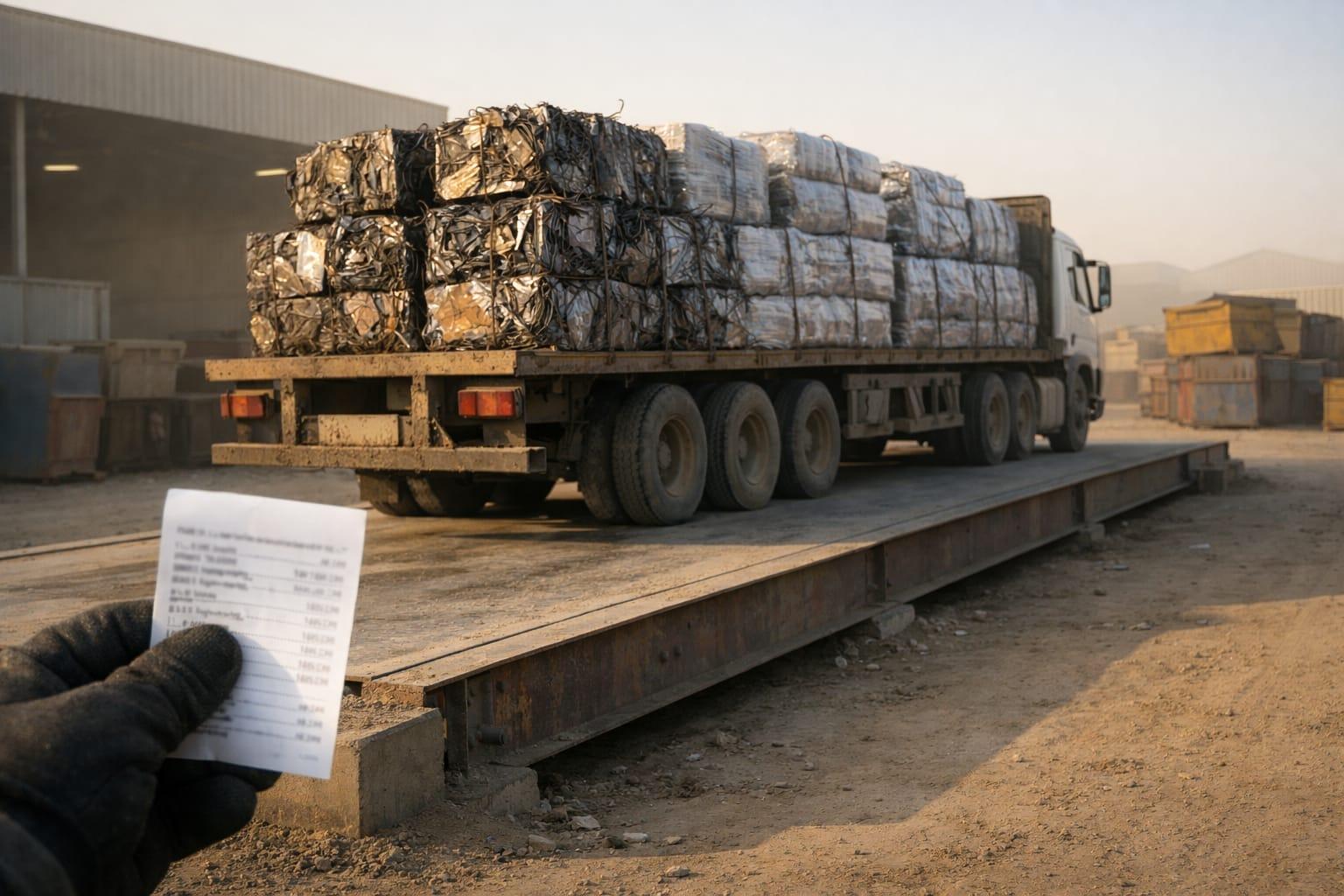
Most UAE sites that fail a zero waste to landfill audit are performing well and documenting badly. UL 2799 awards Silver at 90 to 94% diversion, Gold at 95 to 99% and Platinum at 100%, while TRUE needs 90% averaged over the most recent 12 months and counts waste to energy as zero. Auditors sample weighbridge tickets, transfer notes and downstream certificates.
What do the schemes actually require, UL 2799 or TRUE?
Two documents cover almost every request we see landing on a UAE plant manager's desk. The first is UL Solutions' Environmental Claim Validation Procedure 2799, currently at Edition 4.0 with an issue date of 9 July 2024. The second is TRUE, the Total Resource Use and Efficiency rating administered by GBCI. They measure the same tonnage and can reach opposite answers.
UL 2799 sets three tiers on landfill diversion rate. Thermal processing with energy recovery is treated as diversion, but it is capped and it is disclosed. Commentary on earlier editions put the default ceiling at 10% of total discarded materials, with a route for an individual business to justify a higher share, and live certificates support that reading: Delta Electronics certificate packs dated around July 2024 state a 100% diversion rate with 11% thermal processing with energy recovery printed on the face of the certificate. That 10% figure traces back to published commentary from 2013, so read the Edition 4.0 text yourself before you build a target around it.
TRUE is stricter in one specific place. Diversion is measured from landfill, from incineration including waste to energy, and from the environment. Tonnage that leaves your yard for a combustion line scores nothing. TRUE also requires at least 31 of 81 credit points and seven minimum programme requirements, among them a written zero waste policy, a documented base year adjusted for changes in the size or nature of the business, 12 months of operation, contamination not exceeding 10% for any material leaving the site, a published case study, and 12 months of diversion data submitted to GBCI every year to keep the certification current.
| Requirement | UL 2799 (ECVP Ed. 4.0, 9 July 2024) | TRUE (GBCI) |
|---|---|---|
| Threshold | Silver 90 to 94%, Gold 95 to 99%, Platinum 100% diversion | 90% or greater average diversion |
| Measurement window | Defined reporting period, re-validated periodically | Most recent 12 months, resubmitted annually |
| Waste to energy | Counts as diversion, capped around 10% by default, disclosed on the certificate | Does not count, scored as zero |
| Hazardous waste | Materials legally required to be landfilled are addressed in scope | Scope is non-hazardous solid waste |
| Contamination rule | Assessed through downstream fate evidence | Not more than 10% for any material leaving the site |
| Other gates | Documented mass balance and third-party validation | 31 of 81 points plus 7 minimum programme requirements |
Does sending residual waste to Warsan still count as diversion?
It depends entirely on which scheme your customer or your parent company accepts, and this is the single most expensive misunderstanding in the UAE market right now.
The Warsan Waste to Energy Centre runs as a 35 year partnership between Dubai Municipality and Warsan Waste Management Company, with a first phase costing AED 4 billion. It was inaugurated in July 2023 and reached full commercial operation in September 2024. The federal portal u.ae, updated around September 2026, describes capacity of up to 6,000 tonnes a day, roughly 2 million tonnes a year, handling about 45% of Dubai's total waste, generating 200 to 220 MW, and having diverted more than 4.5 million tonnes from landfill since operations began. The 1.9 million tonnes a year figure still quoted in consultant decks is the design capacity from the 2021 to 2022 construction phase, not the current operating description.
Sharjah has the other option. Emirates Waste to Energy Company, a joint venture between BEEAH and Tadweer Group established in 2022, operates the plant inside BEEAH's waste management complex at Al Sajaa. Reports in April 2026 put cumulative throughput at one million tonnes since inauguration, 30 MW to the Sharjah grid, and 450,000 tonnes of CO2 offset a year, with a second phase planned to double output to 60 MW. Abu Dhabi's first plant, developed by Tadweer with EWEC and announced in October 2023, was reported about 50% complete in September 2025 with roughly 900,000 tonnes a year of capacity and operation targeted by the second quarter of 2027.
So a factory in Dubai Industrial City sending residual to Warsan can hold a UL 2799 claim, including Platinum, with the thermal share stated next to the diversion number. The same tonnage is a straight zero under TRUE. Parent policy can be tighter than either: ABB states on its own corporate pages, last updated around 2025 to 2026, that it adjusted its internal zero waste to landfill target to count no more than 10% waste to energy. Ask the question before you sign the audit contract, not after.
What evidence does the auditor actually sample?
The chain below is our framework, assembled from the published scheme rules and the record keeping duties in force in the UAE. It is not a quotation from a UAE audit protocol, and it is the order in which we have seen claims come apart.
- Weighbridge tickets, per stream, per movement. Actual mass, never skip volume. The ticket needs date, gross, tare, net, waste stream, carrier name, vehicle plate and destination facility. This is the only document that reconciles to a mass balance. Everything else describes intent.
- Waste transfer notes for every regulated movement. In Dubai these run through the digital channel defined under the Implementing Bylaw of Law No. 18 of 2024, Administrative Resolution No. 34 of 2026, issued on 10 February 2026, which refers to the Unified Digital Window created under Decree No. 13 of 2024. Commercial websites name the platform inconsistently and one claims a 24 hour submission deadline. We have not confirmed a brand name or a deadline with Dubai Municipality's Waste and Sewerage Agency, so call them before you write a procedure around either.
- Counterparty permit evidence. Administrative Resolution No. 253 of 2025 approved technical guidelines classifying establishments in waste activities into three categories: collection and transportation, waste trading, and treatment and recycling, with establishments required to comply within six months of entry into force. Your hauler and your baler are usually two different categories and two different documents.
- Disposal facility records. Tadweer Group is the sole custodian of waste management in Abu Dhabi and holds no licensing authority in Dubai, a mix-up we still see in audit files. Sharjah movements evidence through Bee'ah and Tandeef. Dubai movements evidence through approved sites under Municipality permit.
- Downstream recycler certificates showing final fate. Not the first gate the bale passed through. Under TRUE, a recycler's intake rejection record above 10% can knock a stream out entirely.
- A mass balance that reconciles to purchasing and production. Raw material in, product out, scrap generated, tonnage shipped. If the balance does not close, estimated tonnage is hiding somewhere in it.
- Retention. Dubai Law No. 18 of 2024 requires a waste register produced on request, with penalties reported up to AED 500,000. A compliance guide published around October 2026 reports retention of five years for hazardous and two years for non-hazardous waste. We have not read that period in the primary text, so verify it.
Federal Law No. 12 of 2018 on Integrated Waste Management and its Executive Regulations, Cabinet Resolution No. 39 of 2021 dated 21 April 2021, sit above all of this and include rules on transporting waste between the emirates. If your Musaffah plant bales to a recycler in Sharjah or Ajman, that movement needs paperwork at both ends, and our guide to inter-emirate waste transfers covers what the second permit involves.
What does a good diversion number look like in the UAE?
Benchmark against the emirate you operate in, and understand what each number includes before you quote it to a parent company.
| Benchmark | Figure | As reported |
|---|---|---|
| Sharjah diversion rate | 93% | BEEAH Group CEO Khaled Al Huraimel, Sharjah Investment Forum, reported 17 October 2026. A BEEAH release around July 2026 attributes it to Sharjah City rather than the whole emirate, and it is a municipal system figure that includes waste to energy. |
| Abu Dhabi actual diversion | 34% in 2024, including 99% of hazardous waste | Tadweer Group MD and CEO Ali Al Dhaheri, Forbes Middle East, around September 2025 |
| Abu Dhabi target | 80% diversion by 2030 | Reported consistently through 2025 and 2026 |
| Dubai construction and demolition waste | About 95% recycled within the emirate, two sorting lines at 2,000 tonnes a day | u.ae, around October 2026 |
| Dubai municipal waste to Warsan | About 45% of total waste | u.ae, around September 2026 |
Read that table carefully. A site claiming 95% is claiming to outperform the emirate it sits in, which is perfectly achievable on a clean industrial waste profile, and precisely why an auditor will sample it hard. Abu Dhabi's 99% hazardous diversion figure also removes the oldest excuse in the file, that there is nowhere compliant to send solvents and contaminated absorbents.
What does certification cost?
We will not publish a dirham figure we cannot source. There is no public UAE price list for a UL 2799 validation or a TRUE certification, and every quote moves with the number of streams, the number of carriers, the shift pattern and whether the claim covers one building in Al Quoz or six across KEZAD.
The invoice has a predictable shape: a pre-assessment or gap audit, typically one to two auditor days on site; the validation audit itself, which scales with stream count and shifts; annual surveillance to keep the claim live; and for TRUE a registration fee plus the yearly submission of 12 months of data to GBCI. Request the 2799 schedule from UL Solutions Middle East, take TRUE fees from GBCI's published list, and collect day rates from verification bodies operating here, including SGS, Bureau Veritas, Intertek, TUV and DNV. Three quotes, same scope description.
The larger cost is internal and it is rarely budgeted. Weighing capability on streams you currently estimate, segregation points on the production floor, canteen and office collection that nobody has ever contracted properly, and the twelve months you spend generating clean data before anyone can certify anything. Several sites recover part of that by renegotiating the waste contract at the same time, and our piece on how to retender a UAE waste contract sets out what to put in the tender document.
One caution on procurement framing. We have seen no verifiable line item that awards In-Country Value points for a zero waste to landfill certificate. Secondary advisories published around July 2026 describe a Green ICV sustainability bonus capped at 3% built from several components including circular material frameworks, but we have not confirmed that structure with MoIAT. Treat your certificate as tender qualification evidence and parent reporting evidence. The useful parallel is procedural: ICV already forces you to reconcile operational claims to audited financial statements through an authorised third party, so a site that survives ICV verification has the documentary habit. It just has not applied it to the skip yard.
Why do UAE sites fail the audit?
Five patterns account for most of what we see, and none of them are about performance.
- Estimated skip volumes. Eight skips multiplied by four cubic metres multiplied by an assumed density is not mass, and it will not reconcile against a purchase ledger.
- Mixed loads with unknown fate. One commingled container with no downstream certificate sits in the denominator and cannot enter the numerator. It drags a 96% site to 91% on paper alone.
- Hazardous streams quietly scoped out. Legitimate under TRUE, which covers non-hazardous solid waste. Not legitimate in a parent-level claim that silently drops solvents, waste oil and contaminated PPE. If any of that leaves the country, it is a separate regime again, which we cover in our note on Basel permits for hazardous waste exports.
- Canteen and organic waste. Usually uncontracted, never weighed, and the single stream most likely to break a 95% Gold claim in a plant with 400 staff.
- Contractor managed construction and demolition waste. The tonnage leaves under the contractor's permit and the contractor's ticket, and never reaches your register. Dubai recycles roughly 95% of its C&D waste, so the diversion is almost certainly real. The evidence is simply in somebody else's filing cabinet.
What does a 90 day readiness plan look like?
- Days 1 to 15. Inventory every container, every stream and every carrier on site. Pull three months of existing tickets and calculate what percentage of your reported tonnage is estimated rather than weighed. That percentage is your real gap.
- Days 16 to 30. Choose the scheme. UL 2799 if residual goes to Warsan or Al Sajaa and your parent accepts disclosed thermal recovery. TRUE if the customer or parent excludes waste to energy. This decision sets the entire evidence design, so do not defer it.
- Days 31 to 45. Counterparty cleanup. Verify each carrier and recycler against the three categories in Administrative Resolution No. 253 of 2025, confirm the permit covers your waste types, and add a downstream fate certificate clause to every contract at renewal.
- Days 46 to 60. Build the mass balance against purchasing and production data. Close the gap between what you bought and what left the gate.
- Days 61 to 75. Start the clean 12 month data clock. Reconcile transfer note count against weighbridge ticket count every month. A gap found in month two is an administrative fix, the same gap found in month eleven restarts the clock.
- Days 76 to 90. Book the pre-assessment, and move recoverable streams to verified buyers so the number improves while the clock runs.
How does selling recoverable material improve the audit file?
An audit fails on the fate of the bale, not the weight of it. When a stream is sold rather than disposed of, the transaction itself generates the documents the auditor wants: a named, identified counterparty, an agreed material description and tonnage, a payment record, and an acceptance record created at delivery. Selling also pulls tonnage out of the mixed load bucket, because nobody buys a contaminated commingled container.
On our marketplace, counterparties are KYC-verified through UAE PASS, payment sits in escrow through MyFatoorah until the material clears, and the 48 hour buyer inspection window produces a contemporaneous record of contamination and acceptance, which is exactly the test TRUE applies to any material leaving your site. For a plant in Musaffah or Ras Al Khor, that turns a disposal cost line into a revenue line and a verifiable paper trail at the same time. Start with the recoverable streams you already segregate, then list them to verified industrial buyers and keep the transaction record with the weighbridge ticket.
Frequently asked questions
Does sending residual waste to the Warsan plant count as landfill diversion?
Under UL 2799 it does, recorded as thermal processing with energy recovery and printed on the certificate next to your diversion rate, with a default ceiling reported around 10% of discarded materials and a justification route above it. Under TRUE it does not, because diversion is measured from landfill, incineration and the environment, so that tonnage scores zero. Confirm which scheme your customer or parent accepts before you design the evidence chain.
What is the minimum evidence for a zero waste to landfill audit in the UAE?
Weighbridge tickets per stream and per movement showing gross, tare and net, matched to waste transfer notes, plus permit evidence for every carrier and recycler, disposal facility records, downstream certificates proving final fate, and a mass balance that reconciles to purchasing and production data. Dubai Law No. 18 of 2024 requires a waste register produced on request, with penalties reported up to AED 500,000. Secondary guidance from October 2026 reports retention of five years for hazardous and two years for non-hazardous records, which is worth confirming with Dubai Municipality.
Should a UAE factory choose UL 2799 or TRUE?
Choose UL 2799 if your residual waste goes to Warsan or the Sharjah plant at Al Sajaa and your parent company accepts a disclosed thermal recovery percentage. Choose TRUE if the customer or parent excludes waste to energy, and be aware it requires 90% average diversion over the most recent 12 months, 31 of 81 points, seven minimum programme requirements and contamination below 10% on any material leaving the site. The decision changes which documents you need, not how well you perform.
What is a realistic diversion benchmark in the UAE?
Sharjah was reported at 93% in October 2026 by BEEAH's CEO, a municipal system figure that includes waste to energy and that one BEEAH release attributes to Sharjah City. Abu Dhabi diverted 34% of its waste in 2024, including 99% of hazardous waste, against a target of 80% by 2030. Dubai recycles roughly 95% of its construction and demolition waste, so a site claiming Gold is claiming to beat the emirate average on its own footprint.
How long does certification take from a standing start?
The binding constraint is data, not auditor availability. TRUE requires 12 months of diversion data from a facility that has been operating at least 12 months, and UL validation also depends on a defensible reporting period, so most sites need roughly a year of clean weighbridge records before anyone can certify them. Ninety days is enough to fix the evidence chain and start the clock, not to finish it.
Does a zero waste to landfill certificate earn ICV points?
We have found no verifiable ICV line item that awards points for the certificate itself. Advisory sources published around July 2026 describe a Green ICV sustainability bonus capped at 3% across several components including circular material frameworks, but that structure should be confirmed directly with MoIAT before you rely on it. Treat the certificate as tender qualification and parent company reporting evidence, and confirm scoring with the certifying body handling your ICV submission.


Comments(0)
Sign in to join the conversation.